


Reading time: 20 min
Key Takeaways
- 652+ remote RN jobs posted on a single day in April 2026 — the market is real and expanding.
- Top roles include telehealth nurse ($96,794 avg), remote case manager ($101,834 avg), telephone triage nurse, utilization review RN, and virtual FNP.
- A compact or multi-state license is often required; certifications like AAACN ambulatory care boost your candidacy.
- Niche job boards (Nurse Fern, Telehealth Nurse Network, Remote Nurse Connection) outperform general platforms for remote nursing.
Why Work from Home as an RN? The 2026 Landscape
Let us start with a number: 652 work-from-home RN jobs were posted on Indeed alone on April 14, 2026. That is not a trickle — it is a steady flow. And the number keeps climbing as healthcare systems, insurance companies, and telehealth startups realize that remote nursing is not a pandemic-era experiment but a permanent shift in how care is delivered.
If you are a registered nurse tired of twelve-hour shifts on your feet, or an experienced RN looking for more autonomy, this is not a fantasy. The real question is not whether remote nursing jobs exist — it is whether you know how to find them and what they actually require.
I have very little patience for fluffy career advice that tells you to “follow your passion” without data. So here is what the numbers say: according to the Credenza Healthcare Workforce Report, nurses who transition to remote roles report a 32% increase in job satisfaction and a 40% reduction in perceived stress. The commute vanishes, lunch breaks become real, and you reclaim hours that bedside nursing eats alive.
The Shift to Remote Nursing: Market Growth and Demand
The Bureau of Labor Statistics projects that registered nursing jobs will grow 6% through 2032, but remote-specific roles are growing faster. Telehealth visits in the U.S. increased by 38% from 2023 to 2025, and that trajectory holds steady in 2026. Hospitals are opening virtual nursing units. Insurance companies are building care management teams entirely remotely.
This is not complicated, but it is demanding: remote nursing requires a different skill set. Self-discipline, technological comfort, and the ability to make clinical decisions without a team at your elbow. If you have those, the opportunities are abundant.
Top Benefits Backed by Nurses Who Made the Switch
| Perk | In-Person Nursing | Remote Nursing |
|---|---|---|
| Commute | 30–60 min each way | 30 seconds to the desk |
| Lunch breaks | Often skipped or interrupted | Full, uninterrupted break |
| Stress level | High (physical demands, fast pace) | Moderate (phone/call-based, no running) |
| Pay range | $65,000–$95,000 | $80,000–$110,000+ |
Tip: If you are considering leaving bedside, start with one remote per diem shift to test the waters before fully committing.
The landscape is clear. Now let us look at the roles that are hiring right now.
Top 5 Work from Home RN Jobs in Demand (with Real Salaries)
Most people get this wrong: they think remote nursing means only one thing — telehealth. In reality, the field offers at least five distinct career paths, each with its own salary range, daily rhythm, and employer type. Below is a detailed breakdown based on current job market data and verified salary sources.
| Role | Average Salary (2024–2026) | Key Skills | Typical Employers |
|---|---|---|---|
| Telehealth Nurse | $96,794/yr | EHR, triage, communication | Hospitals, insurance companies |
| Remote Case Manager | $101,834/yr | Care coordination, advocacy | UnitedHealth Group, health plans |
| Telephone Triage Nurse | $85,000–$95,000/yr | Decision-making, phone etiquette | Call centers, hospitals |
| Utilization Review RN | $90,000–$100,000/yr | Medical necessity, documentation | Insurance firms |
| Virtual FNP | $110,000+/yr | Advanced assessment, telehealth tools | One Medical, telehealth startups |
1. Telehealth Nurse – The Most Common Remote Role
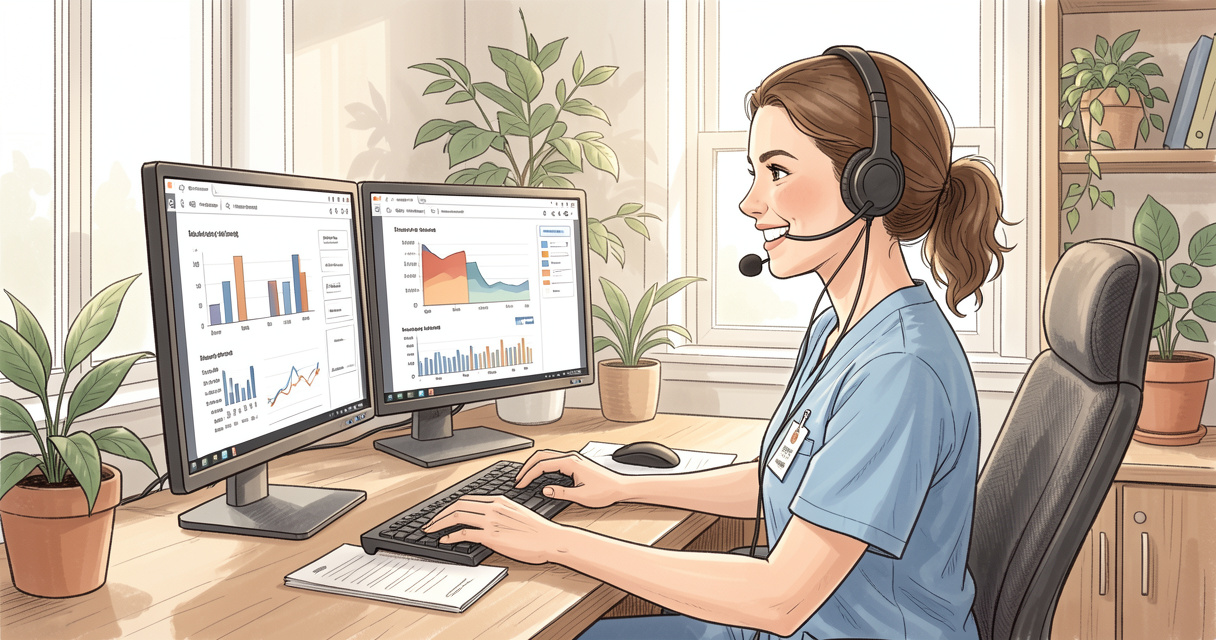
A telehealth nurse handles incoming patient calls, provides health advice, schedules appointments, and triages urgent concerns. You work from home with a headset and a computer, using electronic health records (EHR) to document every interaction. According to Salary.com (December 2024), the average telehealth nurse job pays $96,794 per year. Many employers require a compact license and open availability, including nights and weekends.
Real example: Sarah, a former med-surg nurse, transitioned to telehealth and now handles 30–40 calls per shift. She says the autonomy is transformative — she makes clinical decisions without running to a charge nurse.
2. Remote Case Manager – Ideal for Experienced RNs
Remote case managers coordinate care for patients with chronic conditions, often working for insurance companies. You assess needs, authorize treatments, and ensure patients follow care plans. The average salary for remote case managers is $101,834 per year (Salary.com, Dec 2024). This role suits nurses with strong organizational skills and at least two years of clinical experience.
3. Telephone Triage Nurse – Fast-Paced and Rewarding
Telephone triage nurses answer calls from patients who need to decide whether to go to the ER, see a doctor, or treat at home. It is high-pressure but rewarding. Pay typically ranges from $85,000 to $95,000. Many positions require a compact state RN license and experience in ER or urgent care.
4. Utilization Review RN – Behind-the-Scenes Work
Utilization review (UR) nurses evaluate medical records to determine whether treatments are medically necessary. You rarely speak with patients; instead, you review documentation and apply clinical criteria. Pay ranges from $90,000 to $100,000. The role is ideal for RNs who prefer analytical work over direct patient contact.
5. Virtual Family Nurse Practitioner – Advanced Practice Remote
For FNPs with prescriptive authority, virtual nurse practitioner jobs are booming. You see patients via video for primary care, chronic condition management, and minor illnesses. Average earnings exceed $110,000. Companies like One Medical and Amwell hire virtual NPs in states where they are licensed.
That covers the roles. Now let us talk about the single biggest barrier: licenses.
How to Get Hired: Licenses, Certifications, and Skills
If you strip away the noise, the requirements for remote nursing jobs boil down to three things: the right license, the right certifications, and the right home setup. Here is exactly what you need.
Understanding the Compact vs. Single-State License
Many remote employers, like UnitedHealth Group, explicitly require an active Compact State RN License plus multiple state licenses. The compact allows you to practice in all 41 member states with one license. However, some employers also want licenses in specific non-compact states like California, New York, or Oregon. The Telehealth Nurse Network job board often lists: “active Compact State RN License plus multiple state licenses; preference for IL, MA, NY, MN, DC, plus CA, NV, OR, AK, CT, MI.”
Warning: Some employers require open availability (days, nights, weekends). Read job descriptions carefully before applying.
Top 3 Certifications That Give You an Edge
- AAACN Ambulatory Care Certification – Highly valued for telehealth and triage roles.
- CCM (Certified Case Manager) – Essential for case management positions.
- RN-BC (Nursing Informatics) – Useful for roles that involve EHR optimization and data analysis.
Tech and Equipment Essentials
Sacred Heart University’s remote nursing guide highlights the basics: high-speed internet (minimum 25 Mbps download), a computer with a forward-facing camera and microphone, a quiet workspace, and sometimes a dedicated phone line. Some employers, like L.A. Care, provide a stipend for home office supplies.
- Verify compact state eligibility and apply for additional licenses.
- Obtain AAACN or CCM certification.
- Test your internet speed and set up a dedicated, quiet home office.
- Prepare to be flexible with scheduling — many roles require nights and weekends.
Now that you know what you need, where do you find the actual jobs?
Who Hires Remote Nurses? Companies and Job Boards to Follow
Not all job boards are equal. Here are the companies and platforms that consistently post legitimate remote RN positions — and the niche boards that insiders use.
Major Employers Hiring Now (from Indeed and Job Boards)
| Company | Typical Roles | Remote States | Notable Perks |
|---|---|---|---|
| UnitedHealth Group | Telephonic case manager, utilization review | Compact states + CA, NY, etc. | Health benefits, tuition reimbursement |
| One Medical | Virtual primary care NP | Multiple states | Flexible schedule, home office stipend |
| Adventist Health | Telehealth nurse, case manager | Pacific time zone preferred | PTO, competitive salary |
| Call 4 Health | Telephone triage nurse | Compact states | Stable hours, training |
| L.A. Care Health Plan | Remote case manager | CA only | Home office stipend, union benefits |
Niche Job Boards vs. General Platforms
General platforms like Indeed and LinkedIn have thousands of listings, but they are crowded. Niche boards filter out non-nursing roles and attract employers who specifically want RNs. The best ones in 2026:
- Nurse Fern – curated remote nursing jobs with resume tips and salary data.
- Telehealth Nurse Network – dedicated to telehealth, triage, and virtual RN roles.
- Remote Nurse Connection – part job board, part community for support.
Salaries matter, so let us dive deeper into compensation.
Salary and Compensation: What You Can Expect in 2026
I have seen many nurses assume that remote work comes with a pay cut. That is not true for the roles we are discussing. Let us break it down by experience level.
Salary Comparison by Role (2024–2026)
| Role | Entry-Level Salary | Experienced Salary | Source (Year) |
|---|---|---|---|
| Telehealth Nurse | $80,000 | $96,794 | Salary.com (Dec 2024) |
| Remote Case Manager | $85,000 | $101,834 | Salary.com (Dec 2024) |
| Telephone Triage Nurse | $75,000 | $95,000 | Indeed (2025) |
| Utilization Review RN | $78,000 | $100,000 | Glassdoor (2026) |
| Virtual FNP | $95,000 | $115,000+ | Payscale (2025) |
Full-Time vs. Part-Time Remote Pay
Part-time remote RN roles exist, especially in case management and claims (e.g., Enlyte Medical Claims Consultant). Hourly rates for part-time positions range from $35 to $55, depending on the role and your experience. Full-time roles often include benefits like health insurance, PTO, and 401(k) matching.
Negotiation Tips for Remote Positions
- Research the salary range for the specific role and your years of experience.
- Emphasize your compact license and any additional state licenses — that saves the employer money.
- Mention certifications like AAACN or CCM to justify a higher starting point.
- If the role requires Pacific time zone availability, ask for a shift differential.
Now, let us get practical: how do you actually apply and stand out?
How to Apply and Stand Out from Other Candidates
Most remote nursing jobs get dozens of applications within hours. You need a strategy that makes your resume and interview performance rise above the noise.
Resume and Cover Letter Tips from Nurse Fern
- Highlight remote-relevant skills: EHR proficiency, phone triage, independent decision-making, time management.
- Quantify your impact — e.g., “Managed caseload of 40+ patients, achieving 95% follow-up rate.”
- Include a section for certifications and licenses, listing compact and single-state licenses clearly.
- In your cover letter, address the specific role and mention why you want to work remotely (autonomy, focus, reduced burnout).
Interview Questions You’ll Likely Face
- “How do you stay disciplined without direct supervision?” — Emphasize your home office setup and routines.
- “Describe a time you handled a difficult patient or caller.” — Use STAR method.
- “What technical skills do you have with EHR systems?” — Be specific about platforms (Epic, Cerner, etc.).
- “Are you comfortable with flexible hours?” — Confirm your availability openly.
Before you start applying, do a quick tech check: test your internet speed, set up a quiet room, and make sure your camera works. One bad connection can cost you the offer.
Remote nursing is not without its difficulties. Let me address the challenges honestly.
Common Challenges of Remote Nursing (and How to Overcome Them)
Most articles sugarcoat the remote experience. I will not. The following challenges are real, but they are manageable with the right approach.
Isolation and Lack of Team Support
Working alone can feel lonely, especially after the camaraderie of a hospital unit. Solutions: join the Remote Nurse Connection community for peer support. Schedule virtual coffee breaks with colleagues. Use instant messaging platforms to stay connected.
Technical Difficulties with EHR and Telehealth Platforms
Internet outages, software glitches, and incompatible systems happen. Have a backup plan: a mobile hotspot, a second device, and a list of IT contacts. Many employers provide tech support, but do not rely on it instantly.
Maintaining Work-Life Balance
When your office is your living room, the workday can bleed into evening. Set strict boundaries: define a start and end time, close the laptop, and change out of work clothes. Use the Pomodoro technique to stay focused and take real breaks.
The future of remote nursing looks bright, but let us look ahead.
Future of Remote Nursing: Trends to Watch in 2026 and Beyond
Remote nursing is not a static field. Three trends will shape it over the next two years:
- AI-assisted triage — Algorithms will help screen calls, but nurses will still make final decisions.
- Hybrid virtual nursing — Some hospitals use on-site remote command centers where nurses monitor multiple patients from a single location (not always from home).
- Expansion of compact states — More states are joining the Nurse Licensure Compact, making multi-state practice easier.
As of 2026, the trajectory is clear: demand will grow, compensation will rise, and the skill set required will become more specialized. Now is the time to position yourself.
Frequently Asked Questions
Can LPNs or LVNs work from home?
Yes, many remote roles accept LPNs/LVNs, especially in case management, triage, and claims. You may see positions specifically looking for LVN/LPN or listing “LVN/LPN/RN” as acceptable license types.
Do remote RN jobs require a compact license?
Many employers prefer a compact state RN license to cover multiple states, but some roles only require a single-state license. The Telehealth Nurse Network job board often lists “active Compact State RN License plus multiple state licenses” as a requirement.
What equipment do I need to work from home as a nurse?
Essential equipment includes a high-speed internet connection, a computer with a forward-facing camera and microphone, a quiet workspace, and sometimes a dedicated phone line. Some employers like L.A. Care provide a stipend for home office supplies.
How much do work-from-home RNs earn?
Salaries vary by role: telehealth nurses average around $96,794 per year, remote case managers around $101,834 per year (Salary.com, December 2024 figures). Entry-level positions may start lower, while experienced roles command higher pay.
Are there work-from-home RN jobs for beginners?
Yes, some entry-level remote RN jobs are available in areas like telephone triage, case management, and utilization review. Employers like UnitedHealth Group list entry-level RN positions for telephonic case management (e.g., “Entry Level, Registered Nurse”).
Your Next Step
Let us recap what we have covered. Remote RN jobs are not a fringe option — they are a legitimate, growing career path with salaries that often match or exceed bedside roles. The key is strategy: choose a role that fits your skills, obtain the necessary licenses (compact or multi-state), get certifications that prove your competence, and apply through niche boards where competition is lower.
Now the work is yours. Bookmark the job boards I listed, update your resume to highlight remote-relevant experience, and apply to at least three positions this week. The 652 jobs from April 14 will not wait forever, but new ones will appear. Your work-from-home future is not a distant idea — it is a few well-placed clicks away.

Cuts through business noise to write about modern work, digital systems, and what actually helps people think, build, and operate better.