


Reading time: 16 min
Key Takeaways
- IT infrastructure services cover networks, servers, storage, security, cloud, and disaster recovery—the entire backbone of digital operations.
- Outsourcing these services delivers tangible benefits: higher uptime, stronger security, predictable costs, and built-in scalability.
- Choosing a provider demands rigorous evaluation of SLAs, industry expertise, and pricing models—one size does not fit all.
- Emerging trends in 2026—AI-driven automation, edge computing, zero-trust security, and green data centers—are reshaping what businesses should expect from their infrastructure partners.
What Are IT Infrastructure Services? A Complete Definition
IT infrastructure services are the systems, tools, and support that keep business technology running, including networks, servers, storage, security, cloud platforms, and disaster recovery. They help businesses operate securely and efficiently at scale.
Let us be honest: most organisations underestimate how much of their daily operations depend on these underlying components. When the network slows, when a server fails, when a security breach goes unnoticed—the cost is immediate. According to recent research, the average cost of IT downtime is $5,600 per minute. That figure alone should make every decision-maker rethink their approach to infrastructure.
IT infrastructure services encompass the management, monitoring, and optimization of all technology components an organization relies on to operate. This definition is deliberately broad because the scope is broad. It includes hardware (servers, routers, switches), software (operating systems, middleware, management platforms), networks (LAN, WAN, Wi-Fi), and the people and processes that keep everything running. A managed service provider (MSP) or a larger IT consulting firm delivers these services on a recurring basis, typically under a service-level agreement (SLA).
Core Components: Hardware, Software, and Networks
If you strip away the noise, every IT infrastructure boils down to three layers: the physical layer (hardware), the logical layer (software), and the connectivity layer (networks). Hardware includes servers, storage arrays, and networking equipment. Software covers virtualization platforms, monitoring tools, and management consoles. Networks are the pipes that tie everything together, from internal LANs to cloud gateways. Managed IT infrastructure services ensure each layer is configured, patched, and monitored 24/7.
How Managed Services Differ from Break-Fix IT
The old break-fix model—wait for something to break, then pay to fix it—is still around, but it is a relic. Managed IT services are proactive: they monitor systems continuously, apply patches before vulnerabilities are exploited, and scale resources before demand spikes. The difference is not subtle. A break-fix arrangement leaves you exposed to downtime that could have been prevented. Infrastructure services providers treat your environment as a system to be optimized, not a collection of tickets to close. That is where things get interesting from a cost and reliability standpoint.
Most people get this wrong: they assume managed services are just outsourced help desk. In reality, the infrastructure layer is where the biggest operational leverage lives. When you move from reactive to proactive management, you reduce the frequency and severity of incidents. It is not complicated, but it is demanding. And that demand is exactly what a good provider is paid to handle.
Now that we have established what these services are and why they matter, let us break down the specific categories you will encounter when evaluating providers.
Types of IT Infrastructure Services: A Comprehensive Breakdown
I have very little patience for vague service menus. When you are considering a provider, you need to know exactly what falls under each category and whether it matches your needs. Below is a breakdown of the six primary types of IT infrastructure services available in 2026, along with a comparison table to help you map them to your business context.
Network Infrastructure Services (LAN, WAN, Wi-Fi)
Network infrastructure services cover the design, deployment, monitoring, and maintenance of local area networks (LANs), wide area networks (WANs), wireless networks, and all associated hardware (routers, switches, firewalls). A provider ensures optimal performance, traffic segmentation, and security. For growing companies, this often includes SD-WAN solutions that improve application performance across distributed sites.
Server & Data Center Services
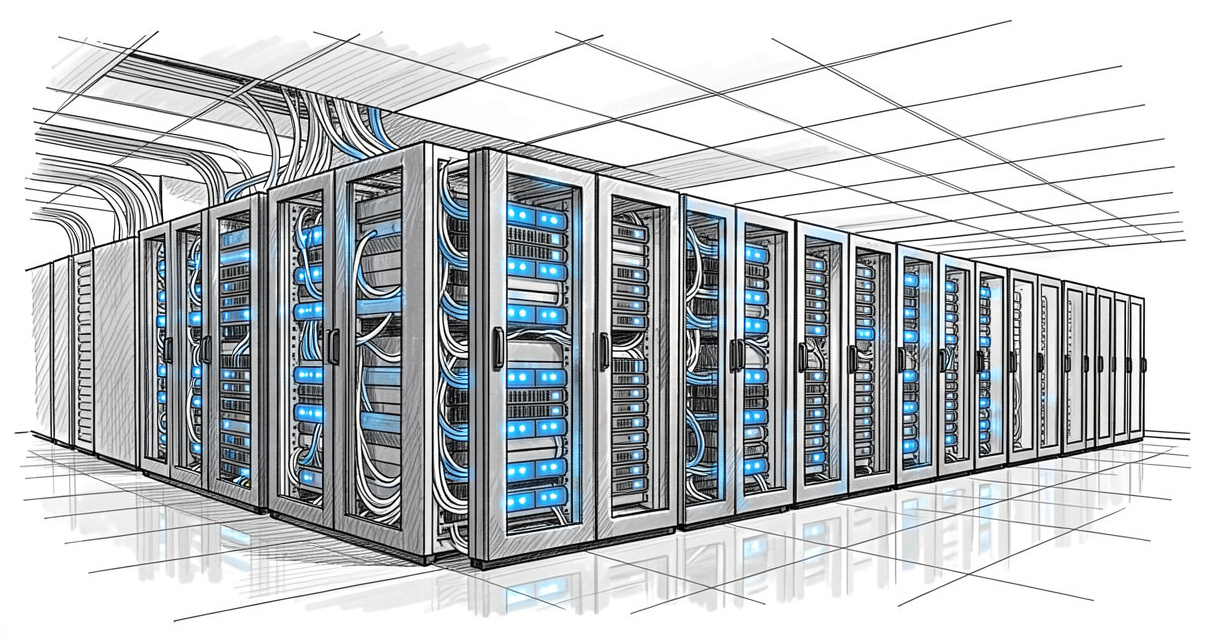
Data center services encompass physical server management, virtualization (VMware, Hyper-V), colocation, and rack-level monitoring. If you run on-premises or hybrid environments, providers handle hardware lifecycle, capacity planning, and environmental controls (power, cooling, fire suppression). Many also offer remote hands support if you colocate in their facilities.
Storage & Backup Solutions
These services include SAN/NAS management, cloud storage integration, and automated backup with retention policies. A robust backup strategy is not optional; it is the last line of defense against ransomware. Providers implement 3-2-1 backup rules (three copies, two media, one off-site) and test restores regularly. Server maintenance often falls under this umbrella, ensuring storage subsystems are patched and optimized.
Cybersecurity Infrastructure Services
Cybersecurity services within infrastructure include firewall management, intrusion detection/prevention, endpoint protection, vulnerability scanning, and SIEM (Security Information and Event Management). In 2026, providers increasingly offer managed detection and response (MDR) as part of their standard stack. Compliance alignment (HIPAA, PCI DSS, SOC 2) is also a common offering.
Cloud Infrastructure Services (IaaS, PaaS)
Cloud infrastructure services providers manage public cloud environments (AWS, Azure, GCP), including virtual machines, containers, databases, and networking. They handle provisioning, cost optimization, security hardening, and migration planning. For businesses that want flexibility without hiring cloud architects, this is often the most strategic outsourcing decision.
Disaster Recovery & Business Continuity
These services ensure that when something catastrophic happens—natural disaster, ransomware, human error—you can recover critical systems and data within defined recovery time objectives (RTOs) and recovery point objectives (RPOs). Providers offer warm standby sites, cloud-based DR orchestration, and regular drills to validate the plan.
| Type of Service | Core Components | Key Benefit | Ideal For |
|---|---|---|---|
| Network | LAN/WAN, SD-WAN, Wi-Fi, firewalls | Reliable connectivity & traffic optimisation | Distributed teams, multi-site businesses |
| Server & Data Center | Physical servers, virtualization, colocation | High availability & capacity planning | Organisations with on-prem or hybrid workloads |
| Storage & Backup | SAN, NAS, cloud backup, retention policies | Data protection & rapid recovery | Any business with critical data |
| Cybersecurity | Firewalls, SIEM, MDR, vulnerability scanning | Reduced attack surface & compliance | Regulated industries (healthcare, finance) |
| Cloud (IaaS/PaaS) | VM, containers, databases, cost optimization | Elastic scalability & reduced CapEx | Growing companies, startups, seasonal traffic |
| Disaster Recovery | Warm sites, DR orchestration, RTO/RPO | Business continuity during disruptions | All businesses with low tolerance for downtime |
The real question is not which category is most important—it is which combination aligns with your operational risks and growth plans. A retail business scaling for Black Friday may prioritise cloud and network services, while a healthcare clinic may lead with security and storage. That is why understanding the full spectrum matters before you engage a provider.
Now, let us move from the what to the why: what actual benefits can you expect when you invest in professional IT infrastructure services?
Why Your Business Needs IT Infrastructure Services: Key Benefits
If you ask most business owners why they outsource infrastructure, the first answer is often “to save money.” That is part of it, but the real advantage is operational resilience. Here are the primary benefits I observe in companies that switch from ad-hoc management to professional IT infrastructure services.
Enhanced Security and Compliance
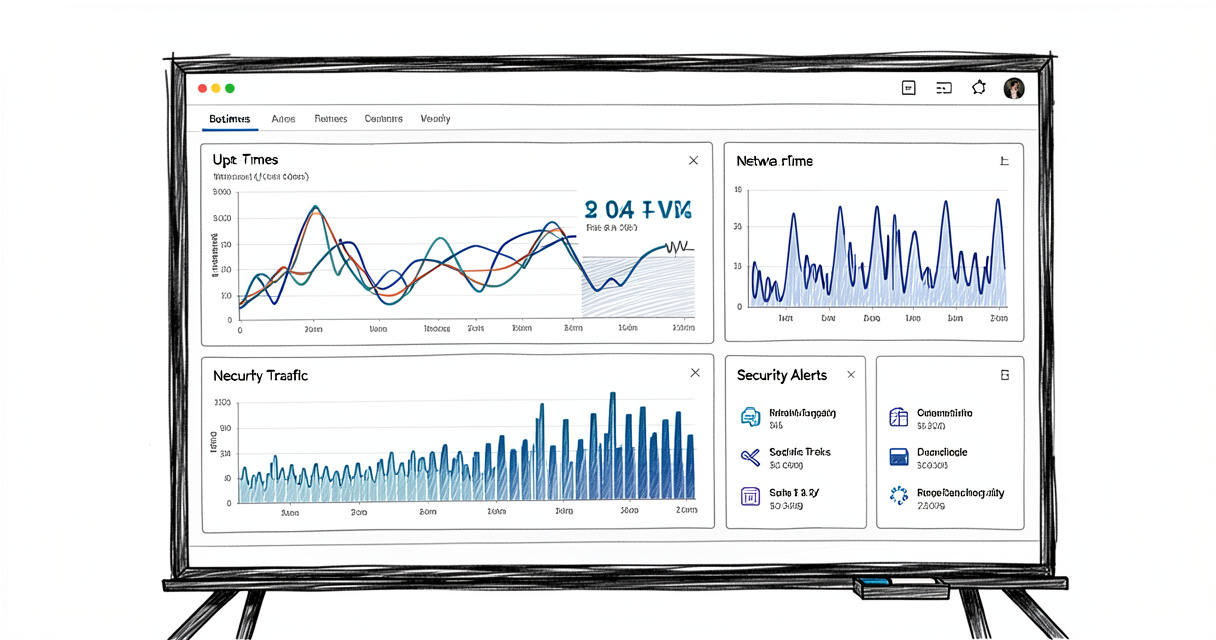
A managed provider brings a dedicated security operations center (SOC) that watches your environment 24/7. They apply patches, update firewall rules, and respond to threats faster than any internal IT generalist could. For regulated industries, they also maintain compliance documentation and audit trails. IT support services at this level transform security from a reactive checklist into a continuous process.
Scalability to Support Growth
One of the most common pain points I see is infrastructure that cannot keep up with business demand. You add users, deploy new software, or enter a new market, and suddenly your network is slow or your cloud costs explode. Infrastructure services providers build scalability into the architecture from day one. They use auto-scaling groups, load balancers, and cloud elasticity to absorb growth without requiring you to re-architect every six months.
Cost-Efficiency and Predictable Budgeting
The shift from capital expenditure (buying servers) to operational expenditure (monthly service fees) is well documented, but the less obvious gain is predictability. With managed IT services, you know exactly what you will pay each month. No surprise hardware failures, no emergency overtime for your IT staff. The provider absorbs the cost of hardware refresh and spare parts within the contract. According to industry benchmarks, companies that outsource infrastructure reduce their total cost of ownership by 25% to 40% over three years.
Proactive Monitoring vs. Reactive Support
I have very little patience for providers that call themselves managed but only fix things when you call them. True IT infrastructure services are proactive: they detect anomalies (disk full, CPU spikes, certificate expiry) and resolve them before they become outages. A mid-size retailer I worked with reduced downtime by over 90% after switching to a provider that used automated monitoring and self-healing scripts. The difference is not subtle—it is the difference between firefighting and flying.
5 Signs Your Business Needs Managed IT Infrastructure Services
- Your internal IT team spends more than 50% of its time on break-fix tasks instead of strategic projects.
- You have experienced more than one unplanned outage in the past six months.
- Your network slows whenever you add new users or applications.
- Compliance audits (HIPAA, PCI, SOC 2) are causing recurring stress and findings.
- You cannot articulate your current backup and disaster recovery RTO/RPO numbers.
If three or more of these apply to your organisation, it is time to have a serious conversation with an infrastructure services provider. The cost of doing nothing is almost always higher than the investment in prevention.
With the benefits clear, the next logical step is how to select the right partner. The market is crowded, but the decision process does not have to be overwhelming.
How to Choose the Right IT Infrastructure Services Provider
I have evaluated dozens of providers over the years, and the same mistakes appear again and again: businesses choose based on price alone, or they sign with a name they recognise without checking if the provider has relevant industry experience. Let me walk you through a framework that will help you choose an IT infrastructure provider that actually fits your needs.
Evaluate Your Current Infrastructure Needs
Before you even look at a vendor, do an internal audit. Map your current infrastructure: number of servers (physical and virtual), network topology, cloud subscriptions, backup methods, security tools, and compliance requirements. Document pain points—where do you lose the most time? Where are you vulnerable? This baseline will be the lens through which you evaluate every proposal.
Compare Service Portfolios and Specializations
Not all providers are created equal. Large firms like Accenture and IBM can handle global enterprises with complex multicloud environments. Regional MSPs often offer more personalised service and faster response times for SMBs. Some providers specialise in specific industries—healthcare, retail, financial services—and come with built-in compliance frameworks. Look for a provider that has experience with your sector and your technology stack. If you are running a hybrid Azure/AWS environment, a provider that only knows on-premises VMware is not going to cut it.
Check SLAs, Certifications, and References
The SLA is the most important document in the relationship. Look for uptime guarantees (99.9% is standard; 99.99% is premium), response times for different severity levels, and penalties for non-compliance. Certifications such as ISO 27001, SOC 2 Type II, and vendor-specific certifications (AWS MSP, Microsoft Gold Partner) indicate a provider that invests in quality. Ask for references from companies similar to yours in size and industry—and actually call them.
Consider Pricing Models: Fixed vs. Variable
Pricing structures vary widely. Some providers charge per user, others per device, and others offer tiered plans based on the number of managed endpoints. Fixed pricing gives you predictability, while variable pricing (based on consumption) can save money if your usage fluctuates. Be wary of contracts with automatic annual escalations or termination fees. The goal is a transparent model where you understand exactly what you are paying for and what is extra.
| Provider | Scale | Industries Served | Typical Pricing Model | Avg. Contract Term |
|---|---|---|---|---|
| Accenture | Enterprise | All, with deep verticals in finance & health | Custom project-based + managed | 3-5 years |
| IBM | Enterprise | All, strong in regulated & government | Per user / per device / custom | 3-5 years |
| ScienceSoft | Mid-market | Tech, logistics, healthcare | Fixed monthly (per user/device) | 1-3 years |
| Regional MSP (example) | SMB to mid-market | Local businesses, healthcare, legal | Per user or flat fee | 1-2 years |
The real question is not which provider has the most services, but which one aligns with your operational maturity and growth trajectory. A fast-growing startup may prefer the flexibility of a regional MSP with a shorter contract; a multinational enterprise likely needs the global reach of an Accenture or IBM.
Now that you have a selection framework, the next obvious concern is cost. Let us get into the numbers.
Cost of IT Infrastructure Services: What to Budget For
I have very little patience for pricing discussions that avoid real numbers. The cost of IT infrastructure services depends on multiple variables, but you can expect the following ranges in 2026.
Typical Pricing Structures in 2026
For small businesses (up to 25 users), comprehensive managed infrastructure typically runs between $200 and $500 per month for basic services—network monitoring, backup, endpoint security, remote support. Mid-size organisations (50–200 users) pay $2,000 to $5,000 per month for a broader scope that includes server management, cloud oversight, and proactive threat hunting. Large enterprises with custom requirements often enter contracts well into six figures per month, but those are typically negotiated on a case-by-case basis.
Pricing models include per-user ($50–$150 per user per month for full stack), per-device ($10–$30 per device), and tiered plans that bundle services. If you are searching for the cost of managed IT infrastructure services per month, the key is to get quotes from at least three providers and compare apples to apples. Beware of providers that exclude cybersecurity or cloud management from their base tier—those are essential, not optional.
Hidden Costs to Watch For
Warning: Beware of providers with unusually low introductory rates—hidden fees often emerge for add-ons like after-hours support, advanced security, or project-based migration work. Always ask for a clear list of what is included and what costs extra. Also watch for contract terms that lock you in for more than 24 months without a clear exit path.
Understanding cost is not just about the monthly bill; it is about total cost of ownership. Factor in hardware refresh cycles, software licensing, and the opportunity cost of downtime. A provider that costs slightly more upfront but delivers 99.99% uptime and faster incident response is usually the better value.
Cost is important, but it should not overshadow the strategic value of modern infrastructure capabilities. Let us look at what is shaping the industry right now.
Emerging Trends in IT Infrastructure Services (2026)
The IT infrastructure trends 2026 landscape is being defined by four powerful forces: AI-driven operations, edge computing, zero-trust security, and sustainability. Here is what they mean for your business.
AI Ops and Predictive Analytics
Artificial intelligence is no longer a buzzword in IT operations—it is a practical tool. AI Ops platforms analyse logs, metrics, and alerts to predict failures before they happen. When a logistics company deployed AI-driven monitoring on its server fleet, it cut incident volumes by 60% within three months and reduced mean time to repair (MTTR) by 45%. Providers that leverage AI are able to offer proactive remediation that was not possible five years ago. This is where IT infrastructure services are heading: from reactive to predictive management.
Edge Computing and IoT Integration
As IoT devices proliferate—smart cameras, sensors, industrial controllers—data needs to be processed closer to the source. Edge computing shifts compute and storage from centralised data centres to local nodes. Infrastructure service providers now offer edge management, including hardware deployment, remote monitoring, and security for distributed environments. A retail chain with hundreds of stores can process inventory data locally and send only summaries to the cloud, reducing latency and bandwidth costs.
Zero Trust Security Models
Trust nothing, verify everything. Zero Trust architecture assumes that no user, device, or network should be trusted by default, even inside the corporate perimeter. Modern cybersecurity services within infrastructure increasingly include zero-trust components: micro-segmentation, continuous authentication, and least-privilege access policies. For remote work, this is non-negotiable.
Sustainable Infrastructure Practices
Green data centres are not just for PR. They use renewable energy, efficient cooling, and hardware recycling programs. Some providers now offer carbon footprint reporting as part of their managed services. Businesses with ESG commitments are prioritising providers that align with their sustainability goals. This trend is accelerating as energy costs rise and regulations tighten.
These trends are not futuristic—they are already embedded in the offerings of top-tier providers. When you evaluate a partner, ask how they incorporate AI, edge, zero trust, and sustainability into their standard service.
To bring this all together, let us look at two real examples of companies that transformed their operations with the right infrastructure services.
Real-World Case Studies: How Companies Benefit from IT Infrastructure Services
Theory is useful, but nothing beats concrete examples. Here are two anonymised case studies that illustrate the impact of professional IT infrastructure services.
Case Study 1: Scaling Cloud Infrastructure for Peak E-Commerce Traffic
A mid-size e-commerce retailer (annual revenue: $50M) experienced severe performance issues during Black Friday spikes. Their on-premises servers could not handle the load, and cloud migration was stalled because internal IT lacked the skills. They engaged a provider specialising in cloud infrastructure services. Within 45 days, the provider designed a hybrid architecture: core inventory on private cloud, customer-facing storefront on AWS with auto-scaling. The result: 99.9% uptime during peak season, a 40% reduction in cloud costs through right-sizing, and the ability to handle 5x normal traffic without manual intervention. The investment paid for itself in the first holiday season.
Case Study 2: Strengthening Cybersecurity in Healthcare
A regional healthcare clinic network (10 locations, 200 users) needed to comply with HIPAA while improving its security posture. Its internal team was overwhelmed with patch management and lacked a SIEM. The clinic signed with a managed security services provider that deployed endpoint detection and response (EDR), 24/7 monitoring, and quarterly vulnerability scans. Within six months, the provider blocked 12 ransomware attempts, reduced the average time to patch critical vulnerabilities from 14 days to 3 hours, and achieved a clean audit. The clinic’s leadership noted that the peace of mind alone justified the monthly fee.
These are not unique stories. I have seen versions of them across manufacturing, legal, education, and SaaS companies. The common thread is that the right provider becomes an operational partner, not just a vendor.
Before we wrap up, let me answer some of the most common questions I hear about IT infrastructure solutions.
Frequently Asked Questions About IT Infrastructure Services
What are the different types of IT infrastructure services?
They include network, server and data center, storage and backup, cybersecurity, cloud (IaaS/PaaS), and disaster recovery services. Each supports a specific aspect of business IT operations and can be delivered as part of a comprehensive managed package.
How do IT infrastructure services improve security?
Through proactive monitoring, patch management, firewall configuration, endpoint protection, and compliance audits. Managed providers often have 24/7 security operations centers (SOCs) that detect and respond to threats faster than most in-house teams.
What is the average cost of IT infrastructure services for a small business?
Small businesses typically pay $200–$500 per month for basic managed services, but costs vary based on number of users, devices, and complexity of needs. Always request a detailed quote that breaks down what is included.
Can IT infrastructure services be customized for my industry?
Yes, many providers offer industry-specific solutions such as HIPAA-compliant services for healthcare, PCI DSS for retail, or FedRAMP for government contractors. Customisation is a sign of a mature provider.
How do I choose between an MSP and a large IT consulting firm?
Consider scale, budget, and required expertise. MSPs offer personalised service for SMBs; large firms provide global reach and advanced capabilities for enterprises. Compare their SLAs, references, and industry focus.
What is the difference between IT infrastructure services and managed IT services?
Managed IT services can be a subset of IT infrastructure services; the latter also includes network design, data center management, and cloud architecture. In practice, many providers use the terms interchangeably, but infrastructure services typically have a broader scope.
How do IT infrastructure services support remote work?
By providing secure VPNs, cloud access, endpoint management, and collaboration tools that ensure employees can access resources safely from anywhere. A good provider will also monitor remote endpoints for security compliance.
If you still have questions, ask your shortlisted providers directly—they should have no trouble answering these clearly.
Conclusion: Turning Infrastructure Decisions Into Business Advantage
Let us recap the essentials. IT infrastructure services cover network, server, storage, security, cloud, and disaster recovery. Outsourcing these services improves uptime, security, and scalability while controlling costs—the data is clear. Choosing the right provider requires evaluating SLAs, industry expertise, and pricing models with the same rigour you would apply to any other business-critical investment.
The real question is not whether you need IT infrastructure solutions—it is whether you can afford to keep managing them alone. Downtime costs $5,600 per minute. Security breaches cost millions. Fragmented, reactive infrastructure holds back growth. A professional provider turns those risks into managed, predictable outcomes.
Take the next step: audit your current infrastructure health and compare quotes from at least three providers. Your business deserves infrastructure that works as hard as you do.

Cuts through business noise to write about modern work, digital systems, and what actually helps people think, build, and operate better.