

Reading time: 3 min
Key Takeaways
- Megaconstellations are transforming the sky: Thousands of satellites already interfere with telescopes, and plans for tens of thousands more will worsen the problem.
- Astronomy faces a quiet crisis: The European Southern Observatory warns that unlimited satellite growth could cripple ground-based space observation.
- Regulation is absent: The current system treats orbit as an open commons, with no caps on density or brightness—a failure of governance disguised as innovation.
If Elon Musk Has His Way, Stargazing Could Soon Be Impossible
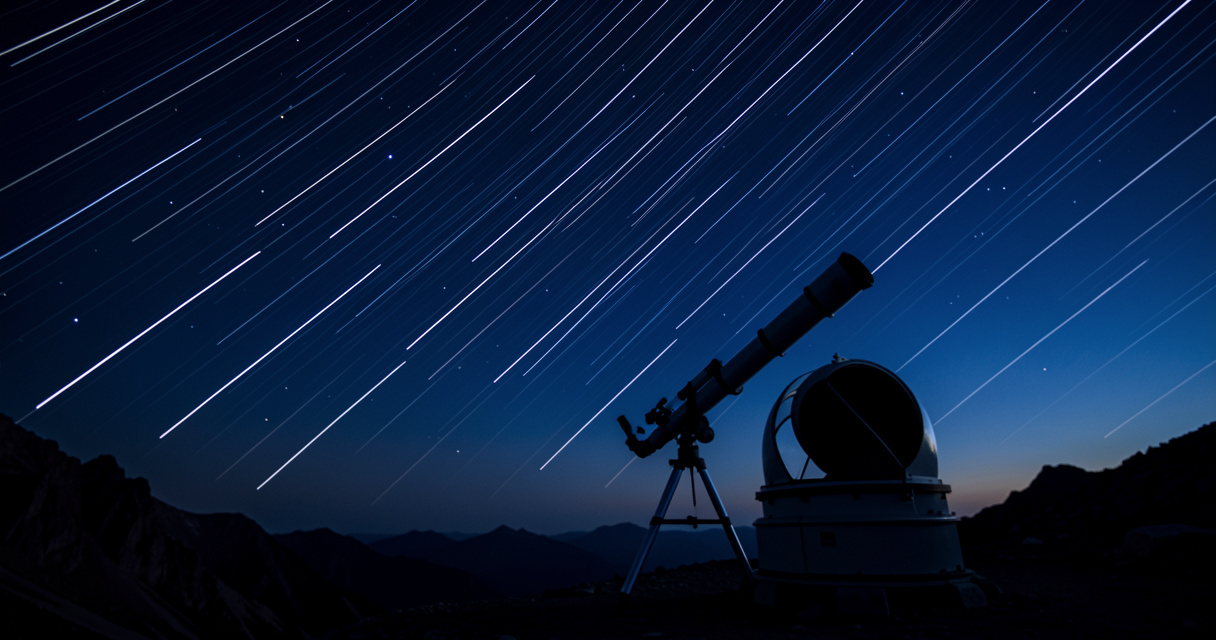
Let us be honest. The night sky has already changed. On a clear evening in 2026, you can see satellites crossing every few minutes. The idea that space is a pristine void is dead. It has been replaced by something else: a commercial corridor where companies like Starlink treat orbit as infinite real estate.
Starlink sells high-speed internet to places conventional providers cannot reach. That sounds noble. But the cost is physical. By mid-2026, the company has launched over 5,000 satellites. Most people get this wrong: the issue is not that you can see them—it is that astronomers cannot see through them.
The Real Problem
The European Southern Observatory (ESO), which operates some of the most powerful telescopes on Earth, has warned that further “clogging” of the night sky could have “devastating consequences” for space science from the ground. Olivier Hainaut, ESO’s directorate of operations, put it plainly: “Until now we have managed, but it’s getting worse.”
The real question is not whether satellites ruin a photograph. It is whether we can afford to lose the ability to observe the universe cheaply and precisely. Ground-based astronomy gives us access to data no space telescope can match at scale. Losing that is not a technological setback—it is an intellectual one.
Orbital Data Centers
Musk has talked about a 1-million-satellite network of “orbital data centers” powered by solar energy. That is where things get interesting. I have very little patience for technological fantasies that ignore physics. A million satellites would reflect trillions of times more light. The sky would not just be crowded—it would be bright. Astronomers call that “sky glow,” and it already threatens to make large surveys financially unusable.
If you strip away the noise, the issue is governance. There is no international body that restricts satellite brightness or orbital density. The current frameworks were written when space meant a few hundred objects. We are now building infrastructure faster than we can regulate it.
Who Decides What the Sky Looks Like?
This is not complicated, but it is demanding. The companies launching these constellations are private. The science agencies asking for regulation are state-funded. The gap between commercial speed and regulatory process is growing.
I am not against internet access. I am against treating the sky as an unclaimed resource. The outcome will be determined not by technical capability but by who gets to draw the first lines. If we wait until the problem becomes obvious, it will already be too late to reverse. Decision-makers in tech, policy, and science should ask one question now: how dense is too dense?
That question needs an answer before the megaconstellation becomes a permanent fixture of our sky—and our blindness.
Cuts through business noise to write about modern work, digital systems, and what actually helps people think, build, and operate better.