


Reading time: 16 min
Key Takeaways
- Multiple role types – Telepharmacy, MTM, prior authorization, and centralized services each offer distinct workflows and salary ranges.
- 1,000+ active openings – Walgreens, Aspen RxHealth, McKesson, CVS Health, and Optum dominate the remote pharmacist job market in 2026.
- Salary upside – Remote pharmacists earn between $115,000 and $145,000, with MTM specialists at the top end.
- Licensing is key – Multi-state credentials via NABP e-Profile are often required; many employers cover the cost.
Over 1,000 remote pharmacist jobs are posted every month across Indeed, LinkedIn, and Glassdoor in 2026, yet many pharmacists miss out because they don’t know where to look or what skills to highlight. The reality is simple: pharmacists want flexibility and work-life balance but struggle to find legitimate telepharmacy jobs and work from home pharmacist positions, compare salaries accurately, and navigate licensing hurdles. This guide cuts through the noise with data, role breakdowns, and actionable steps to land your next remote role.
Types of Remote Pharmacist Jobs You Can Apply For Today
Let’s be honest: most pharmacy career pages lump every remote role under “telepharmacy,” but the reality is more nuanced. If you strip away the noise, four distinct categories dominate the market in 2026. Each demands a different skill set and offers a different salary. Here is how they break down.
Telepharmacy: Remote Verification & Counseling
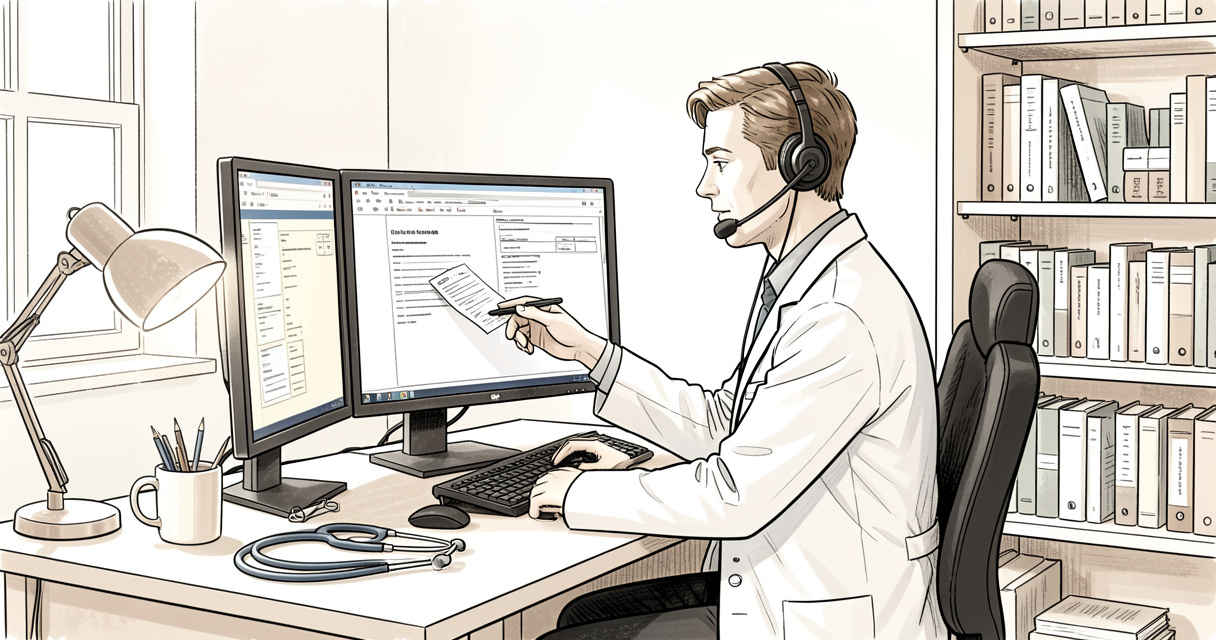
Telepharmacy is the most familiar model. You verify prescriptions remotely, counsel patients via video or phone, and collaborate with on-site technicians. Walgreens alone lists 2,313 results for “remote pharmacist” on its careers page (including centralized services). These roles are abundant because chains are consolidating verification into regional hubs. Expect to handle 60–100 verifications per shift, depending on state ratios. The pay typically starts around $120,000 for experienced pharmacists.
Medication Therapy Management (MTM)
MTM is where clinical skills shine. You conduct comprehensive medication reviews, identify drug therapy problems, and communicate recommendations to prescribers. Companies like Aspen RxHealth have built entire communities around MTM pharmacist work. These roles often pay a bit more – up to $140,000 – because they require deeper clinical judgment. The trade-off? Less volume, more cognitive load.
Prior Authorization & Clinical Review
Prior authorization pharmacist roles are less visible but growing fast. You review PA requests against clinical criteria, often for insurance companies or PBMs. The workflow is repetitive but pays well – around $125,000–$135,000. If you enjoy structured decision-making without patient-facing counseling, this is a solid option. McKesson and Optum are top employers here.
Centralized Pharmacy Services
Centralized services cover everything from order entry to refill authorizations. These are often call-center-style roles where you handle high volumes of routine tasks. They are great for building remote experience, but the pay cap is lower (~$115,000). Walgreens, CVS Health, and large health systems dominate this category.
| Role Type | Primary Tasks | Typical Employer | Salary Range (2026 est.) | Openings on Indeed/ LinkedIn |
|---|---|---|---|---|
| Telepharmacy | Verification, counseling | Walgreens, CVS | $120k–$135k | 2,300+ |
| MTM | Medication reviews, interventions | Aspen RxHealth | $130k–$145k | 800+ |
| Prior Authorization | Clinical review of PA requests | McKesson, Optum | $125k–$135k | 600+ |
| Centralized Services | Order entry, refills | Walgreens, CVS | $110k–$120k | 1,500+ |
The real question is not which role pays the most – it is which aligns with your clinical strengths. A telepharmacy job demands speed and accuracy under pressure; MTM requires patience and deep therapeutic knowledge. Prior authorization suits those who enjoy algorithms and criteria. Centralized services are a solid entry point.
Which role suits you? If you have 5+ years of clinical experience, aim for MTM or prior authorization. If you are transitioning from retail, telepharmacy or centralized services are lower-friction paths.
That is where things get interesting. Once you understand the role types, the next logical step is to compare compensation. Let’s look at the numbers.
Remote Pharmacist Salary & Job Outlook in 2026
I have very little patience for vague salary ranges. Here is what the data actually shows. According to Glassdoor (55 jobs as of March 2026), the average remote pharmacist salary sits at $128,000. LinkedIn’s 1,000+ postings cluster between $120,000 and $145,000. Indeed lists 89 openings as of November 2025, with a similar spread.
Average Salary by Role Type
| Role | Entry-Level (0–2 yrs) | Mid-Level (3–7 yrs) | Senior (8+ yrs) |
|---|---|---|---|
| Telepharmacy | $110,000 | $125,000 | $140,000 |
| MTM Pharmacist | $115,000 | $132,000 | $148,000 |
| Prior Authorization | $108,000 | $128,000 | $142,000 |
| Centralized Services | $95,000 | $112,000 | $125,000 |
Factors That Affect Payscale
Experience is the obvious lever, but licensing breadth matters just as much. A pharmacist licensed in 10+ states can command a premium of $10,000–$15,000 because employers value flexibility. Additionally, roles with overnight shifts (e.g., remote clinical pharmacist overnight shift) often carry a shift differential of 10–15%.
The bottom line: a remote pharmacist salary in 2026 is competitive with retail management, and usually higher than staff positions when you factor in zero commute costs. If you negotiate smartly, you can exceed $145,000.
Now that you know what you can earn, the next question is who is hiring. Let’s examine the top companies actively recruiting remote pharmacists.
Top Companies Hiring Remote Pharmacists in 2026
This section answers the featured snippet question directly. Here is the list of the top companies hiring remote pharmacists in 2026:
- Walgreens – 2,313 openings in centralized services and call centers
- Aspen RxHealth – MTM pharmacist community with flexible scheduling
- McKesson – Clinical roles and technology positions (prior authorization, clinical review)
- CVS Health – Telepharmacy and prior authorization
- Optum – Medication therapy management and specialty pharmacy
Check their career pages for the latest remote opportunities. Each employer has a slightly different culture and requirements.
Walgreens: Centralized Services & Call Center Roles
Walgreens is the largest hirer of remote pharmacists by volume. Their centralized services teams handle verification, refill authorization, and patient counseling from hubs across the country. The pace is fast, but the training is structured. Many pharmacists use this as a springboard to more specialized remote roles.
Aspen RxHealth: MTM Community
Aspen RxHealth is my personal recommendation for pharmacists who want to practice at the top of their license. They match you with MTM cases based on your availability and therapeutic areas. The pay is per-intervention, so highly productive pharmacists earn well above $140,000. I have spoken with a pharmacist who transitioned from 10 years of retail to an MTM role at Aspen RxHealth; she said the shift gave her back her evenings and weekends while doubling her job satisfaction.
McKesson & Optum: Clinical & Technology Roles
McKesson and Optum offer roles that blend clinical review with technology. Expect to work with prior authorization software or clinical decision support tools. These positions often require experience with EMRs (Epic, Cerner) and a willingness to learn proprietary systems. They pay well and offer solid benefits.
3 Things to Check Before Applying to Each Company
- State licensure requirements – some require you to be licensed in the state of the hub, not your home state.
- Technology stipend – Walgreens provides equipment; Aspen expects you to have your own computer.
- Scheduling flexibility – Optum offers 4×10 shifts; CVS often requires weekend rotation.
With the employers mapped, the next section covers exactly how to get your application noticed.
How to Get Hired as a Remote Pharmacist
Most people get this wrong: they apply with the same resume they used for retail jobs. That is a mistake. Remote pharmacy hiring managers want specific evidence of digital workflow skills, multi-state licensing, and communication capabilities. Let me walk you through the three pillars of a successful application.
Resume & Cover Letter Tips for Remote Roles
You need to include keywords like “telepharmacy,” “MTM,” “prior authorization,” “remote verification,” and “EMR proficiency.” Quantify your volume: “Verified 80+ prescriptions per shift with 99.8% accuracy.” In your cover letter, address the licensing question directly – list the states you hold and mention your willingness to obtain more.
Licensing & Credentialing Requirements
I have seen qualified pharmacists get rejected simply because they only held one state license. Remote roles often require licensure in multiple states. The NABP e-Profile simplifies the process: you submit one application and can add states incrementally. Many employers (Walgreens, McKesson) reimburse licensing fees. Aim for at least 3–5 high-population states (CA, TX, FL, NY, IL) to maximize your options.
Tech Setup & Home Office Essentials
Your home office must meet HIPAA requirements: a private room with a door, a lockable file cabinet for paper records (rarely needed), and a wired internet connection (no Wi-Fi for voice calls). Test your headset audio quality – poor sound is a dealbreaker in counseling roles. Some employers provide equipment, but having a backup laptop and UPS is wise.
Remote Pharmacist Job Application Checklist
- Resume optimized for remote keywords
- At least 3 state pharmacy licenses active
- NABP e-Profile completed
- Reliable internet (≥25 Mbps download, ≥5 Mbps upload)
- Noise-canceling headset with mic
- Private room dedicated to work
- Backup power (UPS or laptop battery)
LinkedIn currently lists 459 new remote pharmacist jobs posted daily (as of 2026). If you complete the checklist above and apply to 5–10 roles per week, you can expect interview calls within two weeks.
Now that you know how to get hired, let’s paint a picture of what your day-to-day actually looks like.
Day in the Life of a Remote Pharmacist
A common question people ask: “What does a virtual pharmacist actually do all day?” The answer depends on the role, but most remote pharmacists describe two extremes – the steady rhythm of telepharmacy verification versus the cognitive engagement of MTM reviews.
Telepharmacy Shift: Remote Verification & Counseling
My shift starts at 8:00 AM, but from home. I log into the verification platform, see a queue of 50 orders. Each one requires checking drug interactions, dosing, and patient allergies. Every 20 minutes, a counseling call comes in – often a patient who needs reassurance about a new medication. The pace is constant, but having a second monitor and a quiet space makes it manageable. By noon, I have verified 120 orders and counseled 6 patients. No commute, no drive-through, no interruptions from the front counter. The stress is different – less physical, more mental – but the focus is intense.
MTM Workflow: Medication Reviews and Prior Authorizations
An MTM day is less predictable. I might start with two comprehensive medication reviews (CMRs) that require digging through patient records, calling physicians, and writing up recommendations. Between those, I handle a prior authorization for a specialty drug. The work is rewarding because I see the direct impact on patient outcomes. However, it is mentally draining – I have to stay sharp for 6–8 hours of clinical analysis. The flexibility is a major plus: I can schedule my own blocks as long as I hit weekly targets.
Telepharmacy vs. MTM vs. Centralized Services – Quick Glossary
Telepharmacy: Remote order verification and patient counseling via phone/video.
MTM: Comprehensive medication reviews and interventions.
Centralized Services: High-volume order entry, refill processing, and call center support.
Is working from home as a pharmacist stressful? The answer is yes – but in a different way. You trade physical fatigue for cognitive load. Most remote pharmacists I know say they would never go back.
Before you jump in, you need to understand the licensing machinery. The next section covers the credentialing process in detail.
Licensing & Multi-State Credentialing for Remote Work
Can a pharmacist work from home without a multi-state license? Technically yes, if the employer only services one state. But that limits you to local remote roles. To unlock the full remote pharmacist license advantage, you need a plan.
The NABP e-Profile Process
The NABP e-Profile is a centralized portal where you can apply for licenses in multiple states. It holds your exam scores, background check, and proof of education. You pay a one-time fee and then select each state. The process takes 4–6 weeks per state, so start early. Many employers (including Walgreens and McKesson) list e-Profile submission as a requirement.
States with Fast Reciprocity for Pharmacists
| State | Reciprocity Time | Exam Requirement | Fee |
|---|---|---|---|
| Texas | 2–4 weeks | None (if NAPLEX passed) | $150 |
| Florida | 3–5 weeks | No additional exam | $200 |
| California | 6–8 weeks | CA-specific jurisprudence | $300 |
| New York | 4–6 weeks | NY-specific jurisprudence | $175 |
| Illinois | 3–5 weeks | None | $120 |
Tip: Apply for Texas and Illinois first – they are quick and inexpensive. Then add California and New York if you want to access the biggest job markets.
Licensing is the biggest barrier, but with a systematic approach you can clear it in a few months. Next, let’s address the unavoidable downsides of remote pharmacy work.
Challenges of Remote Pharmacy Work (and How to Overcome Them)
Remote pharmacy is not a panacea. I will be direct: isolation, technology hiccups, and blurred boundaries are real. Here is how experienced remote pharmacists handle them.
Isolation: Without colleagues in the same room, you miss spontaneous clinical discussions. Solution: join online communities like the Aspen RxHealth network or the “Remote Pharmacists” Facebook group. Schedule virtual coffee chats with peers.
Technology issues: Internet outages, software glitches – they happen. Keep a mobile hotspot as backup. Test your setup weekly. Most employers provide IT support, but having a secondary device reduces stress.
Work-life boundaries: When your home is your office, it is easy to work late. Set strict start and end times. Close the laptop physically at the end of your shift. Use a separate calendar for personal appointments.
Don’t overlook these 3 pitfalls of remote pharmacy: 1) Loneliness can lead to burnout – schedule social breaks. 2) Poor ergonomics causes more injuries than you think – invest in a good chair. 3) The lack of hands-on patient contact may feel hollow to some – consider MTM if you crave deeper clinical relationships.
Despite these challenges, the trend is clear: remote pharmacy is expanding. Let’s look ahead.
Future Trends: Remote Pharmacy in 2026 and Beyond
Is remote pharmacy a growing field? Absolutely. Indeed currently lists over 24,000 telepharmacy jobs nationwide (as of early 2026), and that number has grown 40% year-over-year. Three trends will accelerate this further:
Telepharmacy regulation expansion – More states are passing laws that expand remote verification ratios and allow interstate practice. Expect near-universal acceptance by 2028.
AI in prior authorization – Algorithms now handle the first-pass screening of PA requests, but pharmacists are still needed for complex denials and appeals. This will free up time for higher-level clinical work.
MTM demand from Medicare – Medicare Part D plans are investing heavily in medication therapy management to reduce hospital readmissions. The number of billed MTM interventions has increased 25% since 2024.
How to future-proof your remote pharmacy career: Stay current on telepharmacy laws, develop AI literacy (understand what algorithms can and cannot do), and get certified in MTM (e.g., through AMCP or ASCP).
Frequently Asked Questions
What are remote pharmacist jobs?
Remote pharmacist jobs allow licensed pharmacists to perform clinical tasks such as order verification, medication therapy management, and prior authorization from home, using secure technology.
How much do remote pharmacists make in 2026?
Salaries vary by role and experience, with most remote pharmacist positions paying between $115,000 and $145,000 annually. Telepharmacy roles often start around $120,000, while MTM specialists can earn up to $140,000.
Do I need a special license for remote pharmacist jobs?
You need a valid pharmacist license in the state where the employer is based or where the patient is located. Many remote positions require multi-state licensure, which some employers help cover.
Which companies are hiring remote pharmacists in 2026?
Top employers include Walgreens, Aspen RxHealth, McKesson, CVS Health, and Optum. LinkedIn and Indeed list thousands of active openings across these companies.
Can I work from home as a pharmacist right after graduation?
Entry-level remote roles exist, but most require at least 1–2 years of clinical experience. However, some centralized services and MTM companies hire new graduates with strong communication skills.
Is telepharmacy the same as remote pharmacist?
Telepharmacy is a subset of remote pharmacist work that focuses on remote order verification and patient counseling via video or phone. Remote pharmacist roles also include MTM, prior authorization, and clinical review.
Your Move: Start Your Remote Pharmacy Career Today
The numbers speak for themselves: 1,000+ monthly openings, salaries from $115k to $145k, and a trajectory that points up. The barriers are real – licensing, competition, the need for a proper home office – but they are all surmountable with a plan.
Here is what I want you to do tonight: open the NABP website, create your e-Profile, and apply for licenses in Texas and Illinois. Tomorrow, update your resume to highlight remote keywords and volume metrics. By the end of the week, submit applications to Walgreens, Aspen RxHealth, and McKesson. The 2026 remote pharmacy wave is real – do not let it pass you by.
Whether you are a seasoned clinical pharmacist or exploring your first remote role, the opportunities are real. Start by updating your license and resume today to tap into the virtual pharmacist opportunities waiting for you.
The market is moving. Are you ready to move with it?

Cuts through business noise to write about modern work, digital systems, and what actually helps people think, build, and operate better.